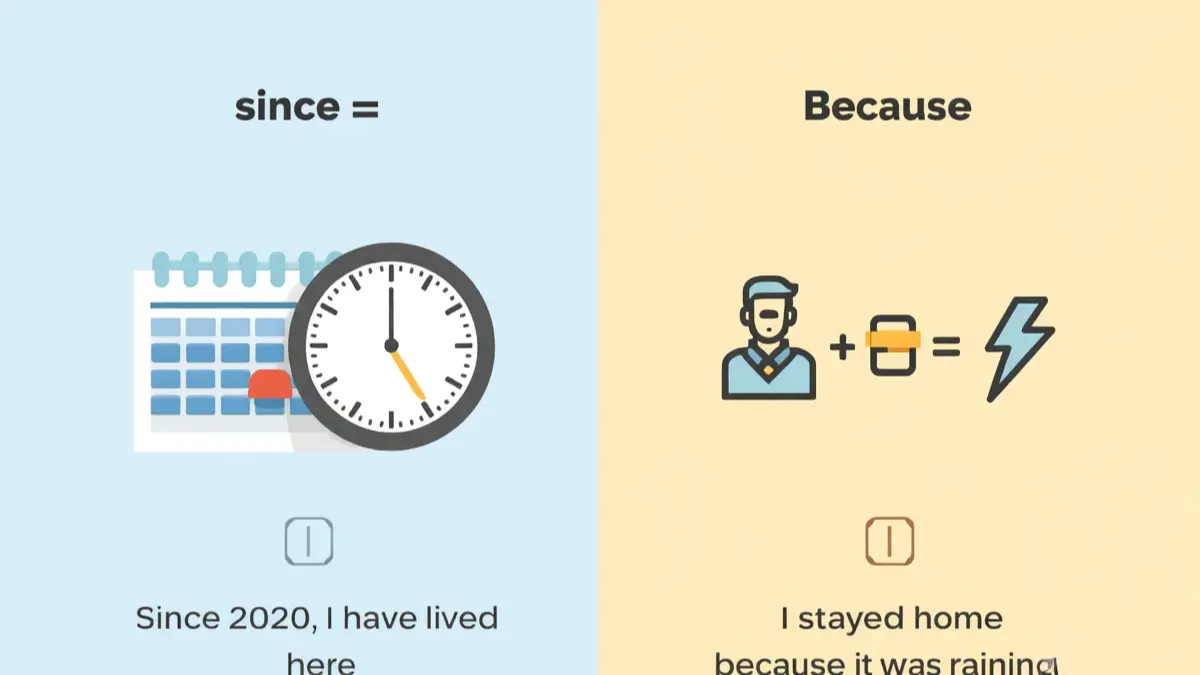
Many English learners struggle with since or because because both words can explain a reason. For example, should you write, “I stayed home because it was raining” or “I stayed home since it was raining”? Both sentences sound correct, which often causes confusion.
People search for since or because because they want to improve their grammar, write more naturally, and avoid mistakes in school assignments, business emails, and everyday conversations. Although these words are similar, they are not always interchangeable. In some situations, because gives a stronger and clearer reason, while since can sometimes indicate time rather than cause.
Understanding the difference between since or because helps you communicate more effectively. It also makes your writing clearer and more professional. Whether you are a student, teacher, blogger, or business professional, knowing when to use each word correctly can improve your English skills.
In this guide, you will learn the meanings, origins, usage rules, examples, common mistakes, FAQs, and practical tips for choosing between since and because with confidence.
Since or Because – Quick Answer
Simple Rule
- Because = gives a direct and strong reason.
- Since = gives a reason that is usually already known or obvious.
Examples
✅ I stayed home because I was sick.
✅ Since it was raining, we canceled the picnic.
Easy Memory Trick
- Because = Strong reason
- Since = Reason or time
Read more: Organise or Organize: Meaning and Correct Usage in English
More Examples
| Word | Example |
| Because | She was late because of traffic. |
| Since | Since the roads were icy, school closed early. |
| Because | We left because it was getting dark. |
| Since | Since everyone agreed, the meeting ended quickly. |
The Origin of Since or Because
Both words have been part of English for centuries.
Origin of “Since”
The word since comes from Old English and originally referred to time, meaning “from then until now.” Later, it also developed a meaning related to reasons and causes.
Origin of “Because”
The word because comes from Middle English and evolved from the phrase “by cause.” It has always been closely connected to explaining reasons.
Why the Confusion Exists
The confusion happens because:
- Both words can introduce reasons.
- Both appear in formal and informal writing.
- “Since” has two meanings: time and reason.
- Many sentences work correctly with either word.
Read more: Analyse or Analyze: Meaning, Spelling and Simple Usage Guide?
British English vs American English Spelling
There is no spelling difference between British English and American English for since and because.
However, style preferences may differ slightly.
Comparison Table
| Feature | British English | American English |
| Since | Since | Since |
| Because | Because | Because |
| Formal writing | Often prefers because for clarity | Often prefers because for clarity |
| Casual writing | Uses both frequently | Uses both frequently |
Examples
British English
- Since it was cold, we stayed inside.
- We stayed inside because it was cold.
American English
- Since the weather improved, the event continued.
- The event continued because the weather improved.
Which Spelling Should You Use?
Since the spelling is identical worldwide, your choice depends on meaning and audience.
Use “Because” When:
- Giving a direct reason.
- Avoiding confusion.
- Writing formally.
Examples
- She succeeded because she worked hard.
- The game was canceled because of rain.
Use “Since” When:
- The reason is already understood.
- Writing in a softer tone.
- Referring to time.
Examples
- Since everyone agreed, we moved forward.
- I have lived here since 2018.
Global Writing Advice
For international readers, because is often the clearest choice when explaining reasons.
Common Mistakes with Since or Because
Mistake 1
❌ I am happy since I got a promotion yesterday.
✅ I am happy because I got a promotion yesterday.
Mistake 2
❌ Since 2020, I missed the bus.
✅ Because I missed the bus, I arrived late.
Mistake 3
❌ Because 2019, she has worked remotely.
✅ Since 2019, she has worked remotely.
Mistake 4
❌ We canceled the trip since of the storm.
✅ We canceled the trip because of the storm.
Since or Because in Everyday Examples
In Emails
- We delayed the launch because the software needed testing.
- Since everyone approved the proposal, we moved ahead.
In News Writing
- The flight was canceled because of severe weather.
- Since conditions improved, services resumed.
On Social Media
- I’m smiling because it’s Friday!
- Since the sun is out, I’m going for a walk.
In Formal Writing
- Researchers expanded the study because early results were promising.
- Since previous research supported the theory, further testing was conducted.
Since or Because – Google Trends & Usage Data
Searches for since or because remain popular among English learners and professional writers.
Countries with High Search Interest
| Country | Popularity |
| United States | Very High |
| United Kingdom | High |
| India | High |
| Canada | High |
| Australia | High |
Why People Search This Keyword
People commonly search for since or because when:
- Learning English grammar.
- Preparing for exams.
- Writing academic papers.
- Creating professional emails.
- Improving communication skills.
Common Usage Contexts
| Context | Preferred Word |
| Direct reason | Because |
| Known reason | Since |
| Time reference | Since |
| Formal writing | Because |
Comparison Table: Since vs Because
| Feature | Since | Because |
| Main Meaning | Reason or time | Reason |
| Clarity | Sometimes less direct | Very direct |
| Formal Writing | Less common | More common |
| Time Reference | Yes | No |
| Example | Since it rained, we stayed home. | We stayed home because it rained. |
FAQs About Since or Because
What is the main difference between since and because?
Because gives a direct reason, while since can indicate either a reason or a time relationship.
Can since and because be used interchangeably?
Sometimes, yes. However, because is usually clearer when explaining a reason.
Which word is better for formal writing?
Because is often preferred because it avoids ambiguity.
Can since refer to time?
Yes. Example: “I have lived here since 2020.”
Why does since cause confusion?
Because it has two meanings: time and reason.
Is because stronger than since?
Yes. Because usually emphasizes the reason more clearly.
Is there a spelling difference between British and American English?
No. Both words have the same spelling in all major English varieties.
Conclusion
Understanding since or because can make your English writing clearer and more effective. Although both words can introduce reasons, they are not always identical. Because provides a direct and strong explanation, making it the preferred choice in formal and professional writing. Since, on the other hand, often introduces a reason that is already known or can indicate a period of time.
The key is to think about clarity. If there is any chance your reader might confuse the sentence, choose because. If the reason is obvious or already understood, since can work naturally. Remember that since also has a time-related meaning, which is why many writers prefer because when explaining causes.
By practicing these simple rules, you can avoid common grammar mistakes and improve both your writing and speaking skills. Whether you are composing emails, academic papers, social media posts, or professional documents, mastering since or because will help you communicate with confidence and precision.

I am Arshman Ali, a professional content writer and the author behind tensestutor.com . I am passionate about making grammar simple and accessible for everyone. Through my writing, I aim to help learners and professionals communicate with clarity and confidence.