Getting a smooth shave sounds simple, but the order of your skincare steps can make a big difference. One common question is: exfoliate before shaving or after? Many people want to know which option gives smoother skin, fewer razor bumps, and fewer ingrown hairs.
In most cases, gentle exfoliation before shaving works better. It helps remove dead skin cells from the surface and can help the razor move more smoothly over the skin. Cleveland Clinic recommends gently exfoliating before shaving as part of a proper shaving routine.
However, exfoliation is not right for every skin type or every shaving situation. Strong scrubs or chemical exfoliants can irritate skin, especially when you use them too often. The American Academy of Dermatology recommends gentle exfoliation and warns against exfoliating damaged or sunburned skin.
This guide explains when to exfoliate, how to combine exfoliation with shaving, what to avoid, and how to adjust your routine for sensitive skin.
Exfoliate Before Shaving or After – Quick Answer
For most people, exfoliate gently before shaving rather than immediately after.
Exfoliating before shaving can remove dead skin cells and help prepare the skin. It may also help reduce the chance of hairs becoming trapped beneath dead skin.
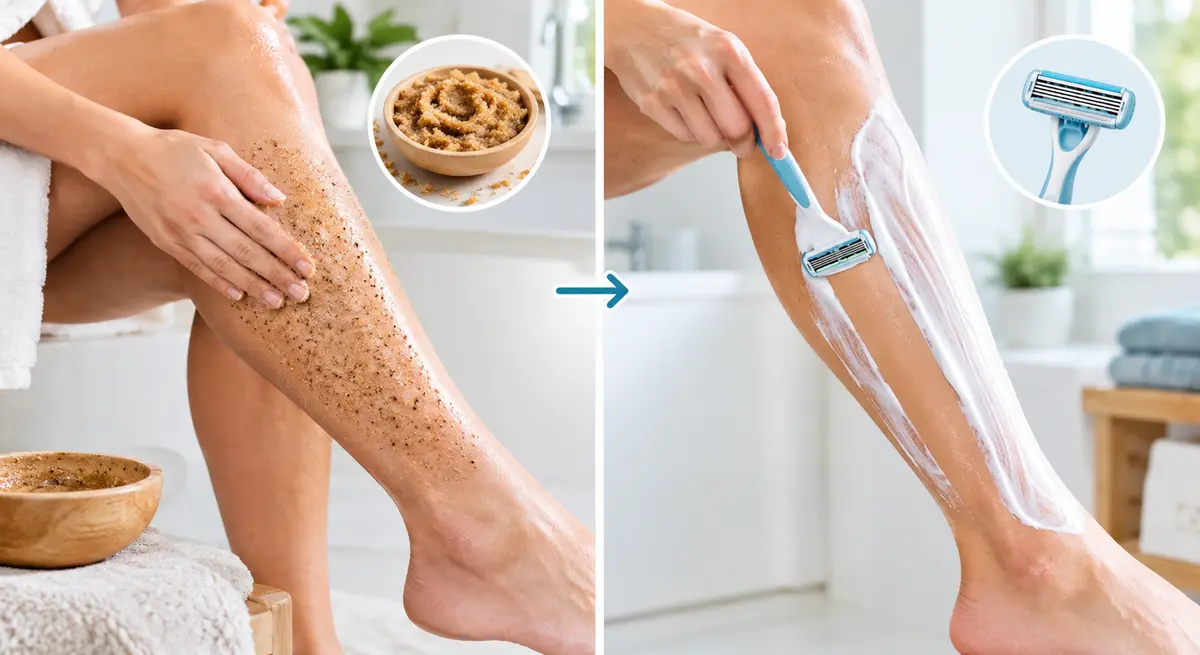
A simple routine looks like this:
- Wet your skin with warm water.
- Gently exfoliate.
- Rinse the exfoliant away.
- Apply shaving cream or gel.
- Shave in the direction of hair growth.
- Rinse the skin.
- Apply a gentle moisturizer.
Cleveland Clinic specifically recommends gentle exfoliation before shaving.
Avoid aggressive scrubbing immediately before shaving. Both exfoliation and shaving can irritate the skin, so combining harsh techniques may increase redness, dryness, or razor burn.
The Origin of Exfoliate Before Shaving or After
The keyword “exfoliate before shaving or after” is not a spelling question. It is a practical skincare phrase that combines three common terms: exfoliate, before, shaving, and after.
The word exfoliate comes from Latin roots related to removing or shedding leaves. In skincare, exfoliation means removing dead skin cells from the outer surface of the skin.
Shaving refers to cutting hair close to the skin with a razor or another sharp tool. Shaving has been used for centuries, although modern razor-based grooming became especially common during the 19th and 20th centuries.
The question became more common as skincare routines became more detailed. People now combine cleansing, exfoliating, shaving, moisturizing, and other treatments. That creates a natural question about the correct order.
The basic idea remains simple: prepare the skin first, shave gently, then soothe and moisturize afterward.
British English vs American English Spelling
Unlike words such as “colour” and “color,” exfoliate has the same standard spelling in British and American English.
The word shaving also has the same spelling in both varieties.
| Term | American English | British English | Difference |
| Exfoliate | Exfoliate | Exfoliate | None |
| Exfoliation | Exfoliation | Exfoliation | None |
| Shave | Shave | Shave | None |
| Shaving | Shaving | Shaving | None |
| Razor | Razor | Razor | None |
| Moisturizer | Moisturizer | Moisturiser | Main spelling difference |
| Sensitive | Sensitive | Sensitive | None |
One notable difference is moisturizer in American English and moisturiser in British English.
So, if you write about skincare for a British audience, you may prefer “moisturiser.” For a US audience, “moisturizer” is more common.
Which Spelling Should You Use?
For the main keyword, use:
Exfoliate before shaving or after
This wording is natural and understandable for both US and UK readers.
If you target a US audience, use terms such as:
- moisturizer
- shaving cream
- razor bumps
- skincare
For a UK or Commonwealth audience, you may see:
- moisturiser
- shaving cream
- razor bumps
- skincare
The main phrase itself does not need a spelling change.
For global SEO, “exfoliate before shaving or after” works well because users from different English-speaking regions can understand it easily.
Common Mistakes with Exfoliate Before Shaving or After
Mistake 1: Exfoliating aggressively
More scrubbing does not mean better results. Harsh exfoliation can damage the skin barrier and cause irritation.
Better: Use gentle pressure and a suitable exfoliating product.
Mistake 2: Exfoliating irritated skin
Do not exfoliate over cuts, open wounds, or sunburned skin. The American Academy of Dermatology advises against exfoliating damaged skin.
Mistake 3: Shaving against hair growth
Shaving against the grain may give a closer shave, but it can increase irritation and the risk of ingrown hairs.
Better: Shave in the direction the hair grows. The AAD recommends this approach to help reduce razor bumps and burns.
Mistake 4: Exfoliating immediately after a harsh shave
Freshly shaved skin can feel sensitive. Adding a strong exfoliant right away may increase irritation.
Better: After shaving, focus on rinsing, cooling, and moisturizing the skin.
Mistake 5: Using a dull razor
A dull blade can pull at the hair and increase irritation.
The AAD recommends replacing disposable blades after about five to seven shaves.
Exfoliate Before Shaving or After in Everyday Examples
In a skincare blog
“Should you exfoliate before shaving or after? For most people, gentle exfoliation before shaving makes the most sense.”
In a social media post
“Trying to avoid razor bumps? Try gentle exfoliation before shaving and moisturize afterward.”
In an email
“I changed my shaving routine by gently exfoliating before shaving and moisturizing afterward.”
In formal writing
“Gentle exfoliation before shaving may help remove surface dead skin cells and prepare the skin for hair removal.”
In a beauty routine
A simple routine can look like:
Cleanse → Exfoliate gently → Shave → Rinse → Moisturize
This order keeps the process simple and avoids putting a strong exfoliant on freshly shaved skin.
Exfoliate Before Shaving or After – Google Trends & Usage Data
Search interest around “exfoliate before shaving or after” comes from a wider group of skincare and hair-removal questions.
Users commonly search related phrases such as:
- exfoliate before shaving
- should I exfoliate before shaving?
- should you exfoliate after shaving?
- exfoliate before or after shaving
- shaving and exfoliation
- how to prevent ingrown hairs
- how to prevent razor bumps
The exact popularity of these phrases changes over time and can vary by country. Interest also tends to follow broader skincare and hair-removal trends.
Google Trends can be useful for comparing search interest by country, season, and related search terms. However, Trends reports relative search interest, not the exact number of searches. Therefore, a higher Trends score does not automatically mean a specific number of people searched for a phrase.
For SEO, the strongest approach is to target the main phrase naturally while also answering related questions about razor bumps, ingrown hairs, sensitive skin, and shaving technique.
Exfoliation Before vs. After Shaving
| Factor | Exfoliate Before Shaving | Exfoliate After Shaving |
| Main purpose | Prepare the skin | Remove dead skin later |
| Effect on freshly shaved skin | Lower irritation risk when done gently | May irritate sensitive skin |
| Helps remove surface dead cells | Yes | Yes |
| Best timing | Before shaving | Usually later, not immediately |
| Sensitive skin | Use extra caution | Wait until skin settles |
| Ingrown-hair concerns | May help as part of a routine | Can help between shaving sessions |
| Moisturizer afterward | Recommended | Recommended |
The key difference is timing and skin condition. Exfoliation can be useful after shaving as part of a broader routine, but applying a strong exfoliant immediately after shaving may irritate freshly shaved skin.
Best Routine: Exfoliate Before Shaving
For many people, this simple routine works well:
Step 1: Wet the skin
Use warm water to soften the hair and skin. The AAD recommends shaving after wetting the skin and hair, such as after a shower.
Step 2: Exfoliate gently
Use a gentle scrub or suitable chemical exfoliant. Do not press hard.
Step 3: Apply shaving cream
Use a moisturizing shaving cream or gel. This helps the razor glide across the skin.
Step 4: Shave with the grain
Move the razor in the direction of hair growth. Use light pressure.
Step 5: Rinse
Rinse away the shaving cream and loose hair.
Step 6: Moisturize
Apply a gentle moisturizer to help keep the skin hydrated.
This routine can help reduce unnecessary friction and irritation.
What About Sensitive Skin?
People with sensitive skin may need a gentler routine.
If your skin often burns, stings, becomes red, or develops bumps, avoid aggressive exfoliation. The AAD notes that sensitive skin may sting or burn after exfoliating products and recommends choosing an approach suited to your skin type.
You may also want to avoid exfoliating immediately before every shave. Instead, exfoliate less often and allow your skin time to recover.
If shaving repeatedly causes painful bumps or persistent irritation, consider changing your shaving method and speak with a dermatologist. Shaving can contribute to razor bumps and folliculitis.
FAQs About Exfoliate Before Shaving or After
1. Is it better to exfoliate before shaving or after?
For most people, gentle exfoliation before shaving is the better choice. It helps remove surface dead skin and prepares the skin for shaving.
2. Can I exfoliate immediately after shaving?
It is usually better to avoid strong exfoliation immediately after shaving because freshly shaved skin can become irritated. Focus on rinsing and moisturizing instead.
3. Does exfoliating prevent ingrown hairs?
Gentle exfoliation may help reduce the buildup of dead skin that can contribute to trapped hairs. However, shaving technique also matters. Ingrown hairs can still occur, especially with coarse or curly hair.
4. Should I exfoliate before shaving my legs?
Yes, gentle exfoliation before shaving can be part of a good leg-shaving routine. Avoid harsh scrubbing, especially if your skin feels dry or sensitive.
5. Should I exfoliate before shaving my face?
You can, but use extra care. Facial skin can react strongly to aggressive exfoliation. A gentle product and light pressure work better than a harsh scrub.
6. Can exfoliating cause razor burn?
Excessive exfoliation can irritate the skin, which may make shaving discomfort worse. Keep exfoliation gentle and avoid using an irritating product before shaving.
7. How often should I exfoliate?
There is no single schedule for everyone. Your skin type and the type of exfoliant matter. The AAD recommends avoiding over-exfoliation because it can leave skin red and irritated.
Conclusion
So, should you exfoliate before shaving or after? For most people, gentle exfoliation before shaving makes the most sense. It can remove dead skin cells and help prepare the skin before you use a razor. Cleveland Clinic recommends gentle exfoliation as part of the pre-shaving routine.
After shaving, focus on calming the skin rather than immediately using a strong exfoliant. Rinse away the shaving product, use a cool rinse or cool damp cloth if needed, and apply a gentle moisturizer.
The American Academy of Dermatology also recommends shaving in the direction of hair growth and using moisturizing shaving products to reduce irritation.
Remember that every skin type reacts differently. If your skin becomes red, painful, or repeatedly develops razor bumps, reduce exfoliation and adjust your shaving method. Persistent or severe irritation may need professional advice.
The simple rule is: prepare gently, shave carefully, and moisturize afterward.

I am Bahadar Ali, a professional content writer and the author behind Tensestutor.com I am passionate about making grammar simple and accessible for everyone. Through my writing, I aim to help learners and professionals communicate with clarity and confidence.