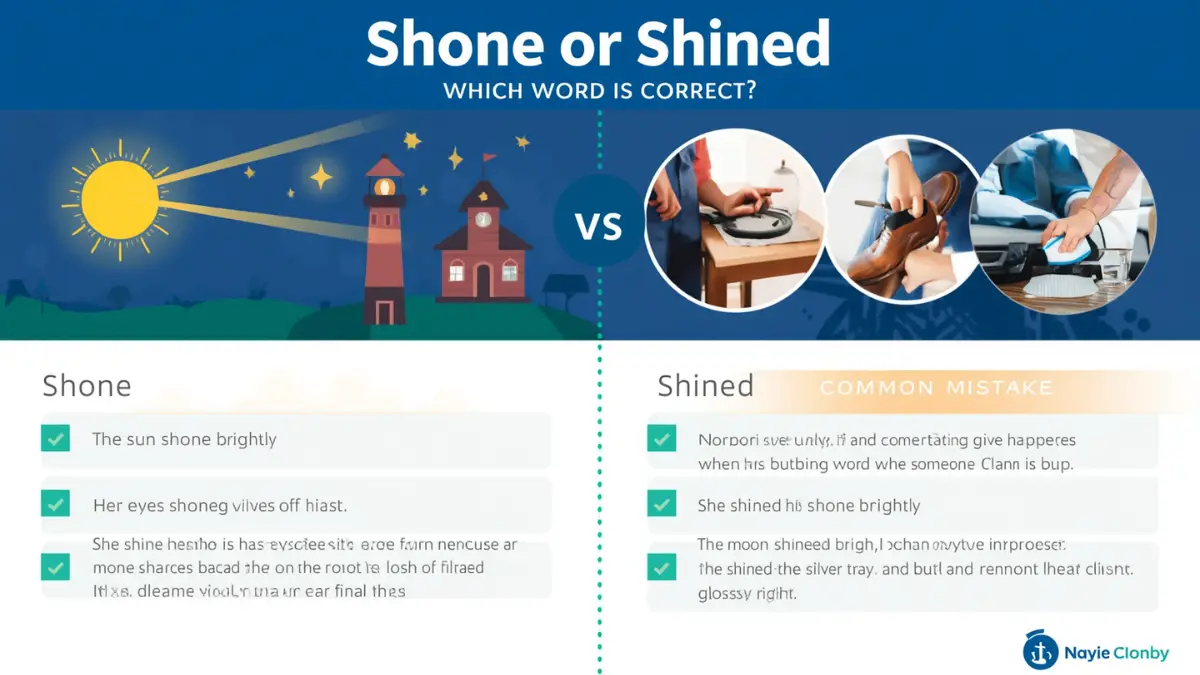
Have you ever wondered whether you should write shone or shined? Many English speakers face this question because both words are accepted forms of the verb shine. The confusion comes from the fact that they are often used in different situations, yet both appear in books, news articles, and everyday conversations.
If you have ever written a sentence like “The sun shined brightly” or “The sun shone brightly” and stopped to think which one is right, you are not alone. Understanding the difference can improve your writing and help you sound more natural.
The good news is that both shone and shined are correct. However, their usage depends on context, region, and meaning. In this guide, you’ll learn when to use each form, how British and American English treat them, common mistakes to avoid, and examples from real-life writing. By the end, you’ll know exactly which word fits your sentence.
Shone or Shined – Quick Answer
Both shone and shined are correct past tense forms of shine.
- Shone is commonly used when something gives off light.
- Shined is often used when someone polishes or makes something bright.
Read more: Anxious or Eager: What’s the Difference
Examples
✅ The sun shone all day.
✅ Her eyes shone with happiness.
Quick Comparison
| Word | Common Meaning | Example |
| Shone | Gave off light | The moon shone brightly. |
| Shined | Polished something | He shined his boots. |
The Origin of Shone or Shined
Both words come from the Old English verb scīnan, meaning “to shine” or “to give light.”
As English evolved, different past-tense forms developed. Historically, shone became the traditional past tense when referring to light. Over time, shined gained popularity, especially in American English, for situations involving polishing or making an object glossy.
Unlike spelling differences such as colour and color, shone and shined are different verb forms with slightly different uses.
Read more: Disinterested or Uninterested: What’s the Difference
Verb Forms Table
| Base Form | Past Tense | Past Participle |
| Shine | Shone/Shined | Shone/Shined |
British English vs American English Spelling
Both British and American English recognize shone and shined, but usage differs.
In British English, shone is strongly preferred when talking about light.
In American English, both forms appear, but shined is often used when polishing objects.
Examples
| British English | American English |
| The sun shone brightly. | The sun shone brightly. |
| Her face shone with joy. | Her face shone with joy. |
| He shined his shoes. | He shined his shoes. |
Comparison Table
| Feature | British English | American English |
| Light Emission | Shone | Usually Shone |
| Polishing Objects | Shined | Shined |
| Formal Preference | Shone | Both Accepted |
| Common Usage | Shone More Often | Mixed Usage |
Which Spelling Should You Use?
The right choice depends on your meaning.
Use Shone When:
- Talking about light.
- Describing brightness.
- Writing formal English.
Examples:
- The stars shone overhead.
- The lamp shone through the darkness.
Use Shined When:
- Talking about polishing something.
- Describing cleaning or making an object glossy.
Examples:
- He shined his shoes.
- She shined the brass handle.
Audience Advice
| Audience | Recommended Usage |
| US Writers | Shone for light, Shined for polishing |
| UK Writers | Prefer Shone for light |
| Commonwealth Writers | Prefer Shone for light |
| Global Audience | Follow meaning-based usage |
Common Mistakes with Shone or Shined
Mistake 1
❌ He shone his shoes.
✅ He shined his shoes.
Mistake 2
❌ The moon shined brightly.
✅ The moon shone brightly.
Mistake 3
❌ She shined with happiness.
✅ She shone with happiness.
Mistake 4
❌ The stars shined across the sky.
✅ The stars shone across the sky.
Easy Rule
If light is coming from something, use shone.
If someone polished something, use shined.
Shone or Shined in Everyday Examples
Emails
✅ The presentation shone during the meeting.
✅ He shined the company trophies.
News Writing
✅ The sun shone throughout the festival.
✅ Staff shined the memorial before the ceremony.
Social Media
✅ Your talent really shone today!
✅ I finally shined my old boots.
Formal Writing
✅ The lighthouse shone across the bay.
✅ Workers shined the metal surfaces.
Shone or Shined – Google Trends & Usage Data
Search interest for shone or shined remains strong because many writers are unsure which form fits their sentence.
Common Search Intent
- Shone vs shined
- Is shined a word?
- Past tense of shine
- Shone meaning
- When to use shined
Popular Regions
The keyword is commonly searched in:
- United States
- United Kingdom
- Canada
- Australia
- India
- Pakistan
Most searches come from students, writers, bloggers, and English learners looking for grammar guidance.
Shone vs Shined Comparison Table
| Feature | Shone | Shined |
| Refers to Light | Yes | Sometimes |
| Refers to Polishing | Rarely | Yes |
| British Preference | Strong | Less Common |
| American Usage | Common | Common |
| Formal Writing | Preferred | Context-Based |
| Example | The sun shone. | He shined his shoes. |
FAQs
Is shone or shined correct?
Both are correct. The choice depends on the meaning of the sentence.
Is “the sun shined” grammatically correct?
Many people say it, but the sun shone is generally preferred.
Is shined a real word?
Yes. It is a standard English word and is commonly used when polishing something.
What is the past tense of shine?
The past tense can be shone or shined, depending on context.
Should I use shone in formal writing?
Yes. Most formal writing prefers shone when referring to light.
Why do Americans use shined more often?
American English accepts shined more broadly, especially for polishing actions.
Can shone and shined be used interchangeably?
Sometimes, but using the meaning-based rule makes your writing clearer.
Conclusion
The difference between shone and shined is simple once you understand the context. Both are correct forms of the verb shine, but they often serve different purposes. Shone is usually the preferred choice when describing light coming from the sun, moon, stars, lamps, or a person’s face. Shined, on the other hand, is commonly used when someone polishes or cleans an object to make it bright.
British English strongly favors shone for light-related meanings, while American English accepts both forms but still often follows the same distinction. If you remember the simple rule light shone, objects were shined you can avoid most mistakes.
Whether you are writing emails, articles, social media posts, or professional documents, choosing the correct form helps your writing appear more natural and polished. By understanding the difference between these two words, you can communicate clearly and confidently in any situation.

I am Arshman Ali, a professional content writer and the author behind tensestutor.com . I am passionate about making grammar simple and accessible for everyone. Through my writing, I aim to help learners and professionals communicate with clarity and confidence.