Have you ever written a sentence like “He dove into the pool” and wondered if it should be “He dived into the pool” instead? If so, you’re not alone. The keyword dove or dived is one of the most searched grammar questions because both words appear in books, articles, and everyday conversations.
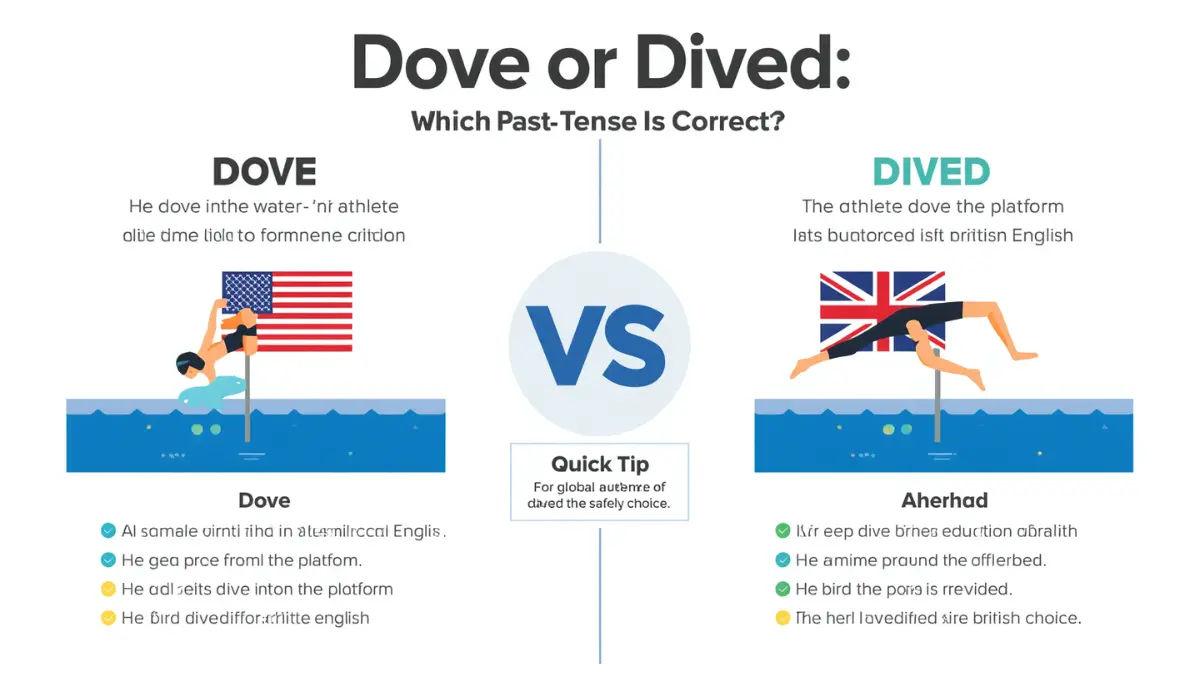
The confusion comes from the fact that both dove and dived are accepted past tense forms of the verb dive. However, their usage depends largely on the variety of English being used. American English often prefers dove, while British English usually favors dived.
Understanding the difference helps writers choose the right word for their audience and avoid grammar mistakes. Whether you’re writing an email, a school assignment, a blog post, or a professional report, knowing when to use dove or dived can make your writing more accurate and natural.
This guide explains the meaning, history, usage rules, common mistakes, examples, and regional preferences so you can confidently choose the correct form every time.
Dove or Dived – Quick Answer
Both dove and dived are correct past tense forms of the verb dive.
- Dove is more common in American English.
- Dived is more common in British English.
Examples
✅ He dove into the water.
✅ He dived into the water.
✅ The swimmer dove off the platform.
✅ The swimmer dived off the platform.
Read more: Chose or Choose: Meaning, Difference, and Simple Usage Guide
Quick Comparison
| Word | Common Region | Example |
| Dove | United States | She dove into the lake. |
| Dived | United Kingdom | She dived into the lake. |
The Origin of Dove or Dived
The verb dive originally formed its past tense as dived.
Over time, American English speakers began using dove by analogy with verbs like:
- Drive → Drove
- Ride → Rode
- Strive → Strove
This pattern made dove sound natural to many Americans.
Meanwhile, British English largely kept the original form dived.
Read more: Choosed or Chose: Which Is Correct ?
As a result, modern English accepts both forms, though regional preferences remain strong.
Verb Forms Table
| Base Form | Past Tense (UK) | Past Tense (US) |
| Dive | Dived | Dove |
| Dive | Dived | Dived (also accepted) |
British English vs American English Spelling
The difference between dove and dived is mainly regional usage rather than spelling.
British English
British English generally prefers dived.
Examples:
- He dived into the sea.
- The bird dived for fish.
American English
American English often prefers dove, though dived is also acceptable.
Examples:
- He dove into the ocean.
- The athlete dove from the board.
Comparison Table
| Feature | British English | American English |
| Preferred Form | Dived | Dove |
| Alternative Form | Rare | Dived |
| Formal Writing | Dived | Dove or Dived |
| Everyday Speech | Dived | Dove |
Which Spelling Should You Use?
The best choice depends on your audience.
Use Dove When:
- Writing for American readers.
- Following US style guides.
- Creating content aimed at the United States.
Use Dived When:
- Writing for UK readers.
- Following British English conventions.
- Writing for Commonwealth countries.
Audience-Based Advice
| Audience | Recommended Form |
| United States | Dove |
| United Kingdom | Dived |
| Canada | Either, depending on style |
| Australia | Dived |
| New Zealand | Dived |
| Global Audience | Dived is safest |
If your audience is international, dived is often the more universally accepted choice.
Common Mistakes with Dove or Dived
Mistake 1
❌ He doven into the pool.
✅ He dove into the pool.
Mistake 2
❌ She has dove into the water.
✅ She has dived into the water.
Mistake 3
❌ They dove off the cliff yesterday. (British formal writing)
✅ They dived off the cliff yesterday.
Mistake 4
❌ The swimmer diveded into the pool.
✅ The swimmer dived into the pool.
Easy Rule
- Past tense: dove or dived
- Past participle: usually dived
Example:
✅ He has dived many times.
Dove or Dived in Everyday Examples
Emails
✅ The rescue team dove into action immediately.
✅ The rescue team dived into action immediately.
News Writing
✅ The firefighter dove into the river to save a child.
✅ The firefighter dived into the river to save a child.
Social Media
✅ I dove into the pool today!
✅ I dived into the ocean during vacation.
Formal Writing
✅ The athlete dived from the platform during the competition.
✅ The bird dived rapidly toward its prey.
Dove or Dived – Google Trends & Usage Data
Searches for dove or dived remain popular because English learners often encounter both forms.
Common Search Questions
- Is dove correct?
- Is dived correct?
- Dove vs dived grammar
- Past tense of dive
- Have dove or have dived
Regional Popularity
| Country | Preferred Form |
| United States | Dove |
| United Kingdom | Dived |
| Australia | Dived |
| New Zealand | Dived |
| Canada | Mixed |
| India | Dived |
Most searches come from students, writers, teachers, and professionals seeking grammar guidance.
Dove vs Dived Comparison Table
| Feature | Dove | Dived |
| Part of Speech | Past tense | Past tense |
| American English | Preferred | Accepted |
| British English | Less Common | Preferred |
| Formal UK Writing | Rare | Standard |
| Example | He dove in. | He dived in. |
| Global Acceptance | Moderate | High |
FAQs
Is dove or dived correct?
Both are correct. Usage depends on regional English preferences.
Is dove American English?
Yes. Dove is mainly used in American English.
Is dived British English?
Yes. Dived is the preferred form in British English.
What is the past tense of dive?
The past tense can be either dove or dived.
What is the past participle of dive?
The past participle is usually dived.
Example:
✅ She has dived before.
Can I use dove in formal writing?
Yes, especially in American English.
Which form is better for international audiences?
Dived is generally the safer choice for global readers.
Conclusion
The debate over dove or dived comes down to regional preference rather than correctness. Both words are accepted past tense forms of the verb dive, but they are used differently around the English-speaking world. American English commonly favors dove, while British English and many Commonwealth countries prefer dived.
For writers, the key is consistency. If your audience is primarily American, dove will sound natural and familiar. If you’re writing for readers in the UK, Australia, New Zealand, or a global audience, dived is often the better choice. Understanding these regional preferences helps your writing match reader expectations and appear more professional.
Remember that both forms communicate the same action. The choice is not about right versus wrong it is about audience and style. By using the form most familiar to your readers, you can improve clarity and make your writing feel more natural. When in doubt, consider who will read your content and choose accordingly.

I am Arshman Ali, a professional content writer and the author behind tensestutor.com . I am passionate about making grammar simple and accessible for everyone. Through my writing, I aim to help learners and professionals communicate with clarity and confidence.