Have you ever stopped while writing and wondered whether you need a comma before but? You are not alone. Many writers, students, and professionals search for the answer because the rule can seem confusing.
The phrase comma before but is a common grammar topic. Some sentences need a comma before but, while others do not. Using the wrong punctuation can make writing look less professional or harder to read.
People often search for this topic when writing emails, essays, reports, social media posts, or business documents. They want a quick answer and clear examples they can follow. The confusion usually comes from not knowing whether but is joining two complete ideas or simply connecting words.
In this guide, you will learn when to use a comma before but, when to leave it out, and how British and American English treat the rule. You will also see examples, common mistakes, comparison tables, and practical advice for everyday writing.
Comma Before But – Quick Answer
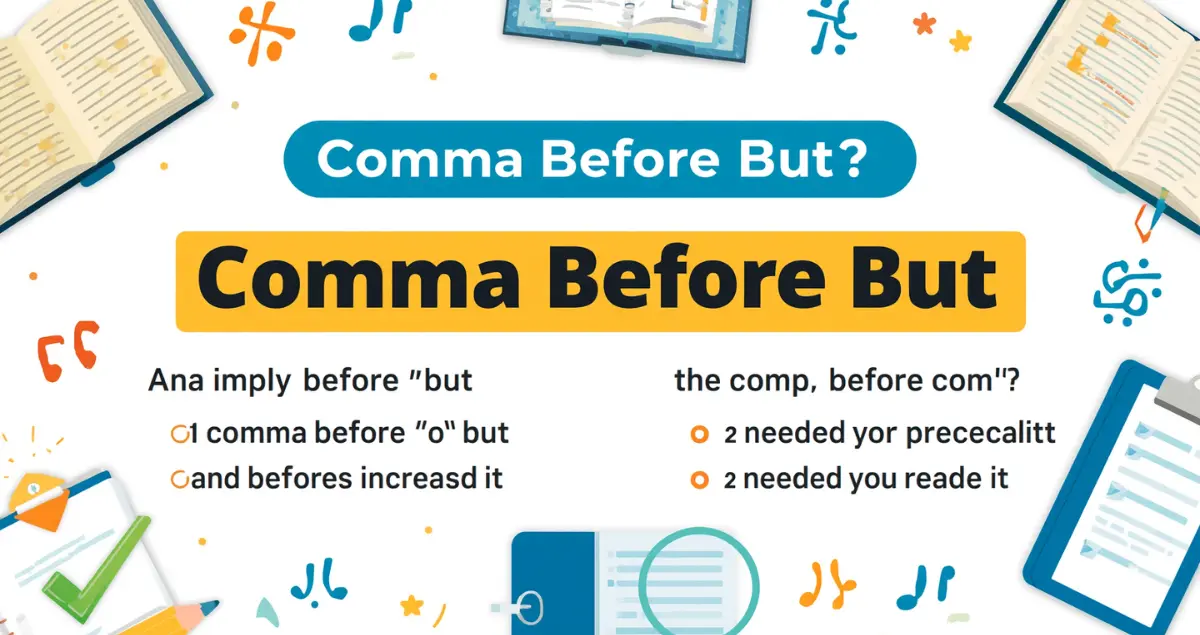
Yes, you usually use a comma before but when it joins two complete sentences (independent clauses).
Correct:
- I wanted to go for a walk, but it started raining.
- She studied hard, but she did not pass the test.
Do not use a comma when joining words or short phrases rather than complete sentences.
Correct:
- I wanted tea but not coffee.
- The car was old but reliable.
Simple Rule:
- Two complete ideas → Use a comma before but.
- Words or phrases only → No comma needed.
Read more: Nauseated or Nauseous: What’s the Difference
The Origin of Comma Before But
The word but comes from Old English butan, meaning “except” or “outside of.” Over time, it became one of the most common coordinating conjunctions in English.
A coordinating conjunction connects equal parts of a sentence. The main coordinating conjunctions are often remembered by the acronym FANBOYS:
- For
- And
- Nor
- But
- Or
- Yet
- So
Grammar guides developed punctuation rules to make sentences easier to read. One of these rules was placing a comma before coordinating conjunctions like but when they connect two independent clauses.
The rule has remained largely unchanged for centuries because it improves clarity and readability.
British English vs American English Spelling
Unlike many English words, comma before but is not a spelling issue. The word but is spelled the same in British and American English.
However, punctuation styles can differ slightly between regions. American style guides often apply comma rules more consistently, while British writers may sometimes use fewer commas in informal writing.
Read more: Disinterested or Uninterested: What’s the Difference
Comparison Table
| Feature | British English | American English |
| Spelling of “but” | but | but |
| Comma before but joining two clauses | Usually used | Usually used |
| Informal writing style | Sometimes fewer commas | More consistent comma use |
| Formal writing | Comma recommended | Comma recommended |
| Academic writing | Comma recommended | Comma recommended |
Examples
British English:
- I wanted to attend the meeting, but I was busy.
American English:
- I wanted to attend the meeting, but I was busy.
In most cases, both versions are identical.
Which Spelling Should You Use?
Since it has the same spelling everywhere, your focus should be on punctuation rather than spelling.
If Your Audience Is in the United States
Follow standard American grammar rules and use a comma before but when connecting two complete clauses.
If Your Audience Is in the United Kingdom
Use the same rule in formal writing. Some informal British writing may omit commas more often, but clarity should always come first.
If Your Audience Is Global
Use the standard grammar rule:
- Comma before but for two complete clauses.
- No comma when connecting simple words or phrases.
This approach is understood worldwide.
Common Mistakes with Comma Before But
Many writers make the same punctuation errors.
Mistake 1: Forgetting the Comma
Incorrect:
- I wanted to leave but it was too late.
Correct:
- I wanted to leave, but it was too late.
Mistake 2: Adding an Unnecessary Comma
Incorrect:
- I like apples, but not oranges.
Correct:
- I like apples but not oranges.
Mistake 3: Using Commas Everywhere
Incorrect:
- The book was long, but interesting.
Correct:
- The book was long but interesting.
Mistake 4: Confusing Clauses and Phrases
Incorrect:
- She was tired but happy.
Correct:
- She was tired but happy.
Comma Before But in Everyday Examples
Emails
- I would like to attend the meeting, but I have another appointment.
News Writing
- The company reported strong profits, but sales growth slowed.
Social Media
- I wanted to go outside, but it started raining again.
Academic Writing
- The results were promising, but additional research is needed.
Business Reports
- Revenue increased this quarter, but expenses also rose.
Comma Before But – Google Trends & Usage Data
The keyword comma before but is searched frequently by students, teachers, writers, editors, and business professionals.
Countries Where Interest Is High
- United States
- United Kingdom
- Canada
- Australia
- India
Common Search Intent
Users often search:
- Do you put a comma before but?
- Is a comma before but always required?
- Comma before but examples
- Grammar rules for but
- When not to use a comma before but
The popularity of this topic remains strong because punctuation questions appear in school assignments, workplace communication, and online writing every day.
Comma Before But Comparison Table
| Sentence Type | Comma Needed? | Example |
| Two complete clauses | Yes | I was hungry, but I kept working. |
| Two words | No | Small but powerful |
| Two phrases | No | In the office but not at home |
| Formal writing | Usually yes when joining clauses | She called, but nobody answered. |
| Academic writing | Yes when joining clauses | The theory was useful, but it had limits. |
Frequently Asked Questions
1. Do you always put a comma before but?
No. Use a comma only when but joins two independent clauses.
2. Is a comma before but grammatically correct?
Yes, when it connects two complete thoughts.
3. Can I start a sentence with but?
Yes. Modern grammar accepts starting a sentence with but.
4. Do British and American English use different rules?
Not significantly. Both generally follow the same punctuation rule.
5. Should I use a comma before but in formal writing?
Yes, when but joins two complete clauses.
6. Why do some sentences not need a comma before but?
Because but may connect words or phrases rather than full clauses.
7. Is using a comma before but important?
Yes. Proper punctuation improves clarity and readability.
Conclusion
Understanding the rule for comma before but is easier than many people think. The key question is whether but connects two complete ideas. If it does, place a comma before it. If it only joins words or short phrases, leave the comma out.
This rule works in both British and American English and is accepted in academic, professional, and everyday writing. While informal writing sometimes bends punctuation rules, using commas correctly helps readers understand your meaning quickly.
Remember the simple test: check whether the words before and after but could stand alone as complete sentences. If they can, use a comma. If they cannot, you usually do not need one.
By applying this rule consistently, your emails, essays, reports, and social media posts will look clearer and more professional. When in doubt, focus on readability and sentence structure rather than memorizing complicated grammar terms.

I am Arshman Ali, a professional content writer and the author behind tensestutor.com . I am passionate about making grammar simple and accessible for everyone. Through my writing, I aim to help learners and professionals communicate with clarity and confidence.