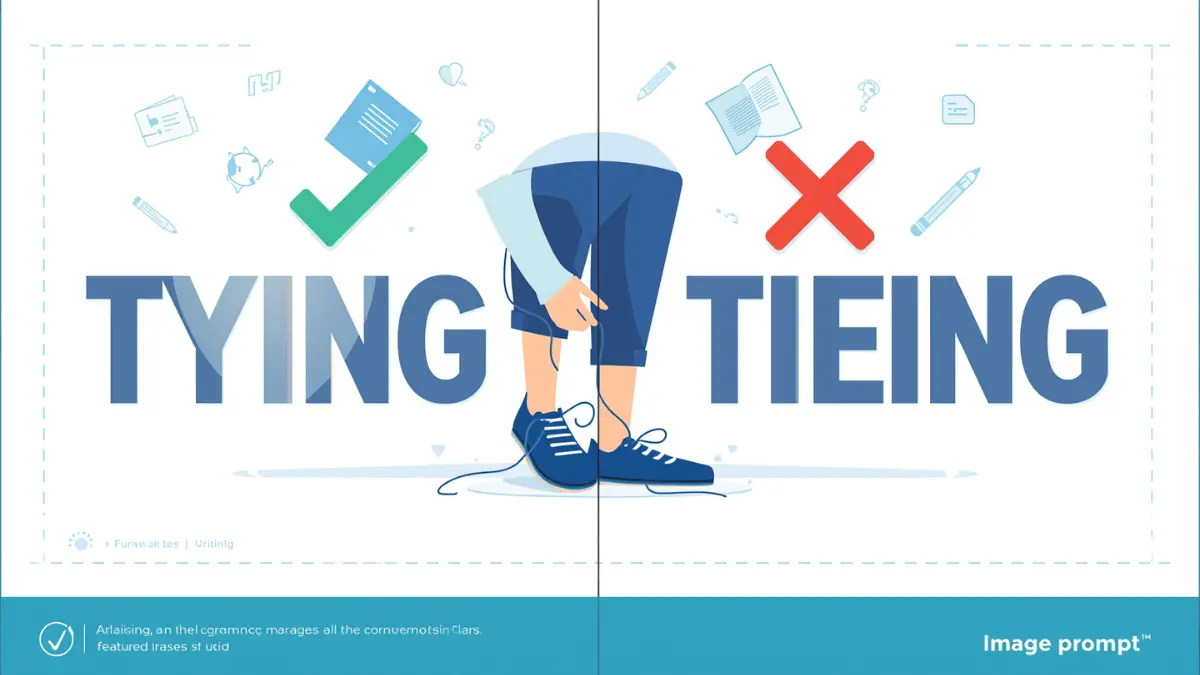
Have you ever stopped while writing and wondered: should it be tying or tieing? Many English learners and native speakers get confused by this spelling. The word looks tricky because verbs ending in -ie often change in unusual ways when adding -ing.
People search for “tying or tieing” because they want the correct spelling for school, emails, social media posts, and professional writing. Using the wrong version can make writing look careless, especially in formal situations.
The good news is simple: “tying” is the correct spelling in modern English. The form “tieing” is usually considered incorrect except in a few rare technical uses. This article explains why the spelling changes, how British and American English use it, common mistakes to avoid, and how to use the word correctly in everyday writing.
By the end, you will know exactly when to use tying and why tieing almost never appears in normal English.
Tying or Tieing – Quick Answer
The correct spelling is tying.
❌ Tieing — usually incorrect
✅ Tying — correct standard spelling
Examples
- She is tying her shoes.
- They are tying the ropes together.
- He spent the afternoon tying fishing knots.
English drops the e and changes ie to y before adding -ing.
Quick Comparison Table
| Word | Correct? | Example |
| Tying | ✅ Yes | She is tying her hair. |
| Tieing | ❌ Usually no | Rarely used in technical contexts. |
The Origin of Tying or Tieing
The word tie comes from Old English and Germanic language roots. It originally meant fastening or binding something together.
When English verbs end in -ie, spelling rules usually change the ending before adding -ing.
Rule
- die → dying
- lie → lying
- tie → tying
Instead of adding -ing directly, the ie changes to y.
If English kept the original spelling, words like dieing or tieing would look awkward and harder to read. Over time, English standardized forms like dying, lying, and tying.
That is why tying became the accepted spelling.
Awhile or a While: What’s the Difference?
British English vs American English Spelling
Both British English and American English use tying as the standard spelling.
Unlike some spelling differences such as:
- colour vs color
- organise vs organize
there is no major regional difference here.
Comparison Table
| Region | Preferred Spelling | Example |
| American English | Tying | He is tying the package. |
| British English | Tying | She is tying the ribbon. |
| Australian English | Tying | They are tying the boat. |
| Canadian English | Tying | We are tying the cords together. |
Important Note
The spelling tieing may appear in rare technical fields like fishing or sailing manuals, but it is uncommon in modern everyday English.
Lying or Lieing: Which Spelling Is Correct?
Which Spelling Should You Use?
You should almost always use tying.
Use “tying” for:
- School writing
- Business emails
- Blogs and articles
- News writing
- Social media posts
- Academic work
Audience-Based Advice
| Audience | Best Spelling |
| United States readers | Tying |
| United Kingdom readers | Tying |
| Commonwealth countries | Tying |
| Global audience | Tying |
If you use tieing in normal writing, many readers may think it is a spelling mistake.
Common Mistakes with Tying or Tieing
People often make spelling mistakes because English rules are not always simple.
Common Errors
| Incorrect | Correct |
| Tieing shoes | Tying shoes |
| Tieing a knot | Tying a knot |
| Tieing the rope | Tying the rope |
Why the Mistake Happens
Many writers think they should simply add -ing to the word tie:
- tie + ing = tieing
But English changes the ie to y first.
Correct form:
- tie → tying
Tying or Tieing in Everyday Examples
Here are real-life examples showing correct usage.
Emails
- I am tying up the final details before the meeting.
- She is tying the documents together.
News Writing
- Workers were tying safety ropes before climbing.
- The athlete was seen tying his shoes before the race.
Social Media
- Just finished tying balloons for the party!
- Dad is teaching me about tying fishing knots.
Formal Writing
- Properly tying the materials improves safety.
- The process involves tying several wires together.
Tying or Tieing – Google Trends & Usage Data
Search data and online usage show that tying is far more popular than tieing.
Popular Usage by Country
| Country | Common Spelling |
| United States | Tying |
| United Kingdom | Tying |
| Canada | Tying |
| Australia | Tying |
Why “Tying” Dominates
- It follows standard English grammar rules.
- Dictionaries list it as the correct form.
- Schools and style guides teach this spelling.
- Major publishers use “tying.”
The spelling tieing appears only rarely and mostly in niche technical writing.
Tying vs Tieing Comparison Table
| Feature | Tying | Tieing |
| Standard English spelling | ✅ Yes | ❌ No |
| Used in formal writing | ✅ Yes | ❌ Rare |
| Accepted in schools | ✅ Yes | ❌ Usually no |
| Common in US English | ✅ Yes | ❌ No |
| Common in UK English | ✅ Yes | ❌ No |
| Seen in technical contexts | Rarely | Sometimes |
FAQs About Tying or Tieing
Is tying the correct spelling?
Yes. Tying is the correct and standard spelling in English.
Is tieing ever correct?
It is rarely used in technical contexts, but in normal writing it is usually considered incorrect.
Why is it “tying” instead of “tieing”?
English changes i.e. to y before adding -ing.
Do British people use “tieing”?
No. British English also uses tying.
Is “tieing” in the dictionary?
Some dictionaries may mention it as a rare variant, but tying is the preferred spelling.
How do I remember the correct spelling?
Think of similar words:
- die → dying
- lie → lying
- tie → tying
Which spelling should students use?
Students should always use tying in school and academic writing.
Conclusion
The difference between tying and tieing is simple once you know the spelling rule. In modern English, tying is the correct and widely accepted form. The spelling follows a common grammar pattern where verbs ending in -ie change to y before adding -ing.
Both British and American English use tying, so there is no regional spelling difference. Whether you are writing an email, article, school assignment, or social media post, tying is the safest and most professional choice.
Although you may occasionally see tieing in rare technical writing, it is uncommon and usually avoided in everyday communication. Using the correct spelling helps your writing look polished, clear, and trustworthy.
If you ever feel unsure, remember this simple pattern:
- tie → tying
- die → dying
- lie → lying
That easy rule will help you avoid mistakes every time.

I am Arshman Ali, a professional content writer and the author behind tensestutor.com . I am passionate about making grammar simple and accessible for everyone. Through my writing, I aim to help learners and professionals communicate with clarity and confidence.