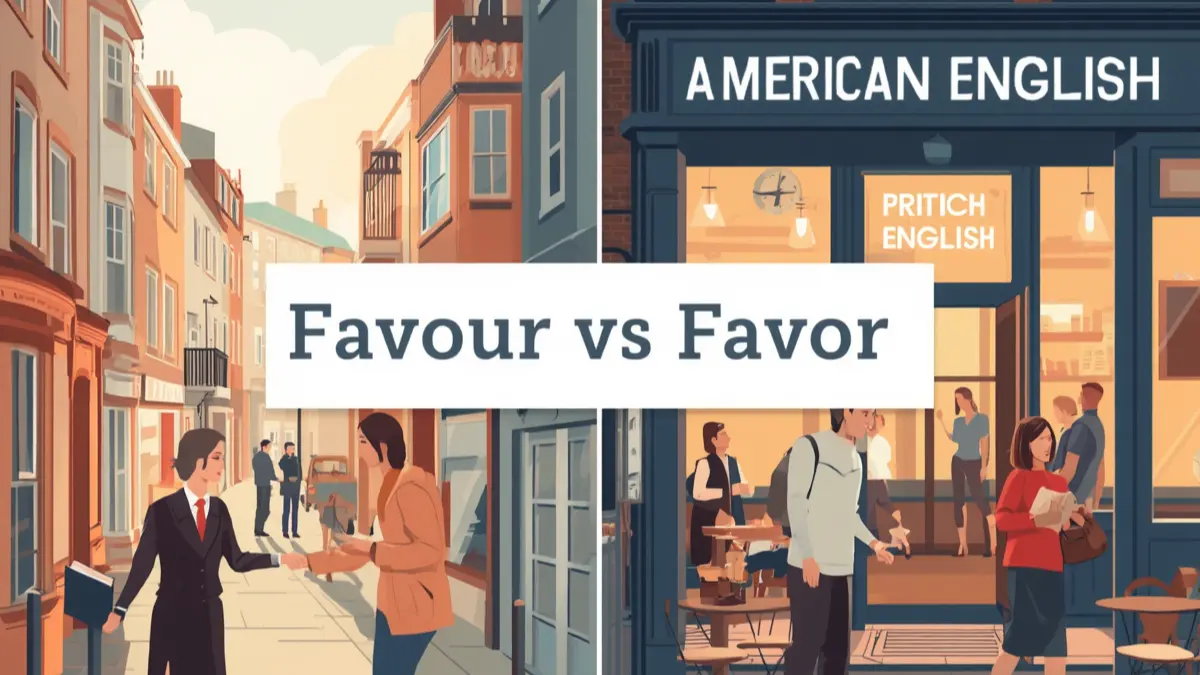
Many English learners get confused between “favour” and “favor.” They look the same, but the spelling changes depending on where you are in the world. This small difference often creates big doubts in writing emails, exams, blogs, and business communication. People search for this keyword because they want a quick, clear answer without complex grammar rules.
The truth is simple: both words have the same meaning, but they follow different English systems. One is used in British English, and the other is used in American English. If you mix them, your writing may look incorrect depending on your audience.
In today’s global world, people write for international readers. That makes this confusion even more important. Should you write “do me a favour” or “do me a favor”? The answer depends on your target readers. This article will clearly explain the difference, origin, usage rules, and real examples so you never get confused again.
Favour or Favor – Quick Answer
“Favour” and “favor” mean the same thing. The only difference is spelling.
- Favour → British English
- Favor → American English
Examples:
- UK: Can you do me a favour?
- US: Can you do me a favor?
Both are correct. Just choose based on your audience.
Acknowledgement or Acknowledgment: ?
The Origin of Favour or Favor
The word comes from Latin “favor”, meaning kindness or support. It entered English through Old French “faveur.”
In older English, many words used “-our” endings, like colour, honour, and favour. Later, American English simplified many spellings to make them shorter and easier. That is why “favor” dropped the “u.”
So:
- British English kept older French-style spelling
- American English made spelling simpler
British English vs American English Spelling
British and American English follow different spelling patterns. This is one of the most common reasons for confusion.
Key Rule:
- British English → uses -our
- American English → uses -or
Comparison Table
| British English | American English | Meaning |
| favour | favor | kindness or support |
| colour | color | appearance shade |
| honour | honor | respect |
| flavour | flavor | taste |
Which Spelling Should You Use?
Choose spelling based on your audience:
- US audience → use “favor”
- UK, India, Pakistan, Australia → use “favour”
- Global audience → stay consistent (pick one style)
Simple rule:
Do not mix both in one document. It looks unprofessional.
Judgement or Judgment: Which Spelling Is Correct?
Common Mistakes with Favour or Favor
Here are common errors people make:
❌ Mixing both spellings in one article
✔ Choose only one style
❌ Thinking meanings are different
✔ Meaning is always the same
❌ Using wrong form in formal writing
✔ Match your audience’s English style
Favour or Favor in Everyday Examples
Emails:
- Could you please do me a favour?
Business writing:
- We request your favor in approving this proposal.
Social media:
- Please favour this post if you agree!
News:
- The government announced tax favors for small businesses.
Favour or Favor – Google Trends & Usage Data
Search data shows clear regional patterns:
- “favor” is more popular in the United States
- “favour” is widely used in the UK, India, and Commonwealth countries
- Global writing platforms show mixed usage depending on audience targeting
Most SEO content today adapts spelling based on reader location.
Comparison Table: Favour vs Favor
| Feature | Favour | Favor |
| Region | UK English | US English |
| Style | Traditional | Simplified |
| Usage | Commonwealth | United States |
| Meaning | Same | Same |
FAQs about Favour or Favor
1. Are favour and favor the same?
Yes, both mean kindness, support, or approval.
2. Which spelling is correct?
Both are correct. It depends on UK or US English.
3. Is favour British English?
Yes, “favour” is British English spelling.
4. Is favor American English?
Yes, “favor” is an American English spelling.
5. Can I mix both spellings?
No, it is better to stay consistent in one style.
6. What is the plural form?
Favour → favours / Favor → favors
7. Which is better for SEO?
Use the spelling your target audience searches most.
Conclusion
The difference between favour and favor is small but important. Both words mean exactly the same thing, but their spelling depends on regional English rules. British English uses “favour,” while American English uses “favor.” Choosing the right form helps your writing look professional and clear.
If you are writing for UK, India, or Commonwealth readers, “favour” is the best choice. If your audience is in the United States, “favor” is correct. The most important rule is consistency. Never mix both spellings in one article, email, or document.
Understanding this difference improves your grammar, writing confidence, and SEO performance. Whether you are a student, blogger, or business writer, using the correct spelling helps you connect better with your audience. Keep it simple, stay consistent, and always match your reader’s English style.

I am Bahadar Ali, a professional content writer and the author behind Tensestutor.com I am passionate about making grammar simple and accessible for everyone. Through my writing, I aim to help learners and professionals communicate with clarity and confidence.