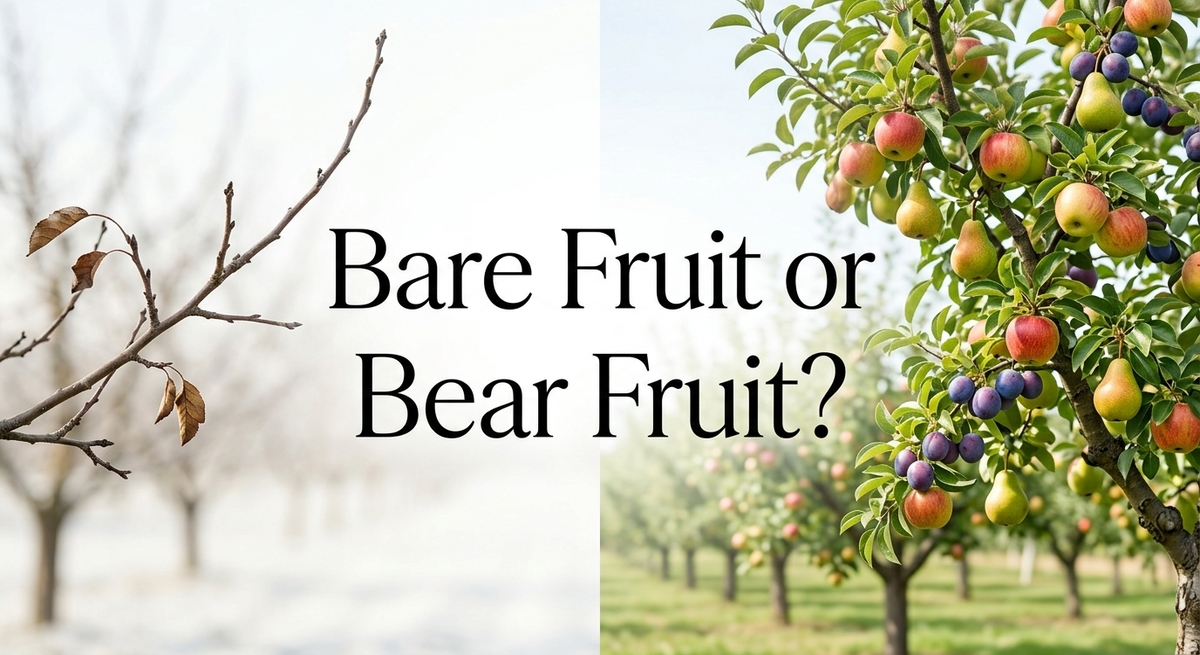
Ever had to write an e-mail message and type “bare fruit,” only to pause and consider whether it should be “bear fruit”? You are not alone. Many writers are misled by this phrase, as it’s easy to hear but can be confusing when it comes to spelling. The words ‘bare’ and ‘bear’ have the same sound, but different meanings.
This phrase is used by people who want to sound professional when writing emails, essays or business reports. A mistake letter can turn a sentence into a very confusing or silly sentence. This article will provide you with a definite answer, history of how it happened to be used and when and how to use it correctly. By the finish, you will never again be ready to overlook this expression.
Bare Fruit or Bear Fruit – Answer:
The proper word is “bear fruit”.
The meaning of the word “bear” here is “to produce” or “to yield. So “bear fruit” comes from a plant bearing fruit, or an effort finally coming to fruition.
Examples:
- The apple tree will produce fruit in the fall.
- The fruits of her labor finally came last year.
The term “bare fruit” is false. Naked or uncovered is “bare”, such as “bare feet” or “bare walls”. It isn’t about results production.
Origin of the fruit of the bear:
The Old English origin of the word bear is beran, meaning ‘bear’, ‘to carry’ or ‘to bring forth’. It was used by farmers to refer to trees which had fruit on their branches. Later, it became a metaphor for “bear fruit”. Later it meant any action or achievement that is successful, not only something that can be represented by a literal fruit.
The word “bare” meanwhile is derived from the Old English word bær which means “naked” or “uncovered”. There is no common past between these two words. They sound the same only because pronunciation in English often doesn’t follow the rules of spelling. There are thousands of homophone pairs and that is what you have in English.
British English vs American English Spelling:
Thankfully, this phrase remains the same in British and American English. Both make use of the phrase “bear fruit”.
Word forms of the same word are related to the other word forms but may vary slightly in tense and style.
| Feature | British English | American English |
| Base phrase | bear fruit | bear fruit |
| Past tense | bore fruit | bore fruit |
| Past participle | borne fruit | borne fruit |
| Common spelling error | bare fruit (wrong) | bare fruit (wrong) |
Spelling remains consistent throughout the world. The confusion lies with sound and not in regional grammar rules.
Which Spelling to Use?
In every place you go and in every place you write, be like “bear fruit”.
- US writers: Use “bear fruit” in business, academic, and casual writing.
- British and Commonwealth authors: Take the same approach as “bear fruit. Here there is no regional variation.
- International English learners: Remember that “bear” means “produce”. Imagine a bear with something in its arms.
This is an unusual English phrase that is shared by every English speaking country.
common mistakes that result in fruit not bearing:
- Bee (moving) ✅ → Bee (idiot) ❌
- The words bare and bear are synonymous.Bare fruits and bear fruits are both acceptable.
- Bearded fruit = Bore fruit ✅
- Has produced fruit? (No fruit, Yes fruit) ❌ → ✅
- Mixing it with “bare with me” ❌ → Should be “bear with me” ✅ (a different but related mix up)
Hint: If you want to mean “produce” or “carry,” always use the word “bear.
Know the meaning of the term bear fruit in practice.
E-mail: “Our new marketing campaign is paying off as sales are up 20% this quarter.
News: “The long disagreement was settled yesterday, thanks to years of diplomatic negotiations.
Social Media: “What you sow is what you’ll reap. Keep going! 🌱”
Formal Writing: “The research effort has made progress: there are three published studies.
Bear Fruit : Google Trends & Usage Data:
According to data from search engines the most common spelling globally is ‘bear fruit’, particularly in the United States, United Kingdom, Canada and Australia. The wrong one, “bare fruit,” is subject to search frequently, primarily by folks who are checking their spelling prior to writing an e-mail or essay. The use of “bear fruit” increases in a business context, particularly in the context of investments, research findings, and long-term projects, and is more common in news usage.
| Variation | Correct? | Common Context |
| Bear fruit | ✅ Yes | Business, news, essays |
| Bare fruit | ❌ No | Common misspelling |
| Bore fruit | ✅ Yes | Past tense |
| Borne fruit | ✅ Yes | Perfect tense |
| Bearing fruit | ✅ Yes | Present continuous |
FAQs:
1. Is there a difference between ‘bare fruit’ and ‘bear fruit’?
Ans. It will always bear fruit, bare means naked or uncovered.
2.Define “bear fruit.?
Ans. It implies that something works; something happens to it, such as a plant bearing fruit.
3.What is the VERB in the PAST TENSE in the sentence: “It bears fruit”?
Ans.The simple past is “bore fruit.
4. What is the past participle of ‘bear fruit’?
Ans.The past participle is “borne fruit.”
5. When is bare fruit OK?
Ans.No. There’s always a spelling error in this phrase.
6. What are the reasons behind the confusion between “bare” and “bear”?
Ans.They are homophones – that is, they have the same pronunciation but different meanings and spellings.
7. What non-agricultural contexts are there where we can talk about ‘bearing fruit’?
Ans.Yes. It is frequently used in metaphors for business, research or personal objectives.
Conclusion:
It is “bear fruit,” never “bare fruit. This mix-up is due to the fact that these words are pronounced in the same way, but have different meanings. The words “bear” and “bare” are homonymous and homophonic, and their meanings are slightly different: “to bear” is to produce or carry; “to bear” is to be naked or uncovered.
The rule remains consistent with British English, American English, and global English, and is one of the most easily standardized phrases if you know it. Keep in mind that the past tense of the verb “bear” is “bore fruit” and the past participle is “borne fruit. When writing a business letter, news article, or social media update, the correct use of “bear fruit” will make your writing look polished and professional.
Here’s a quick trick to remember: The word “bear” means to bear or produce, such as carrying the fruit of a tree. Now you can confidently use ‘bear fruit’ every time with this guide, without fear of falling into the trap of one of the most common spelling traps in English.

I am Arshman Ali, a professional content writer and the author behind tensestutor.com . I am passionate about making grammar simple and accessible for everyone. Through my writing, I aim to help learners and professionals communicate with clarity and confidence.